


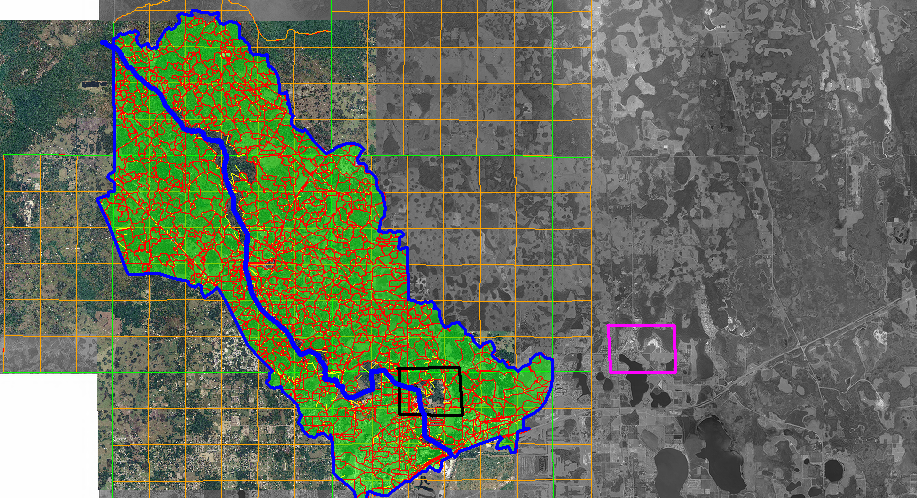
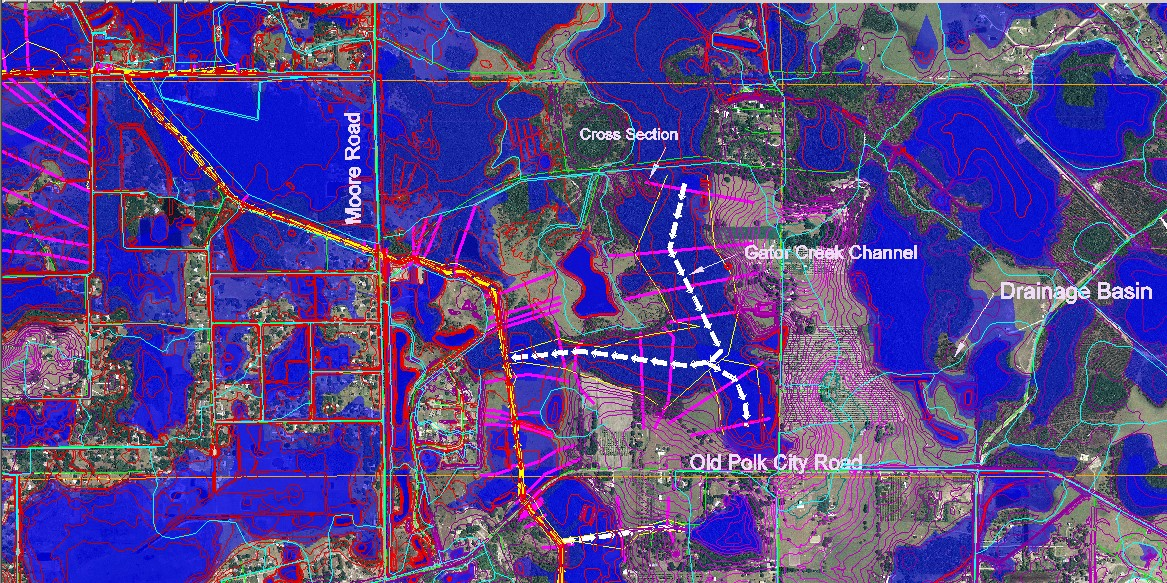

Developed the largest 80-square mile 2-D hydrologic/hydraulic surface water model and digital terrain model for evaluating the drainage response of Gator Creek proper to various extreme storm events. One of the main objectives for this study was to better understand the existing level of service (LOS) of the local surface water systems (e.g. conveyance and collection, collector roads). This analysis included the creation of subroutines, which automated the creation of an advanced digital terrain model using digitized aerial photogrammetry to create feature lines, break lines, and additional discretization of the topography. As a result, stage-area-volume relationships, natural overland conveyances, channel sections, flow paths, etc. of the physical hydrography were quantified and characterized for performing the modeling. This information was translated from the measured physical condition to a 2-dimensional model with more than 1300 sub-basins, 1628 nodes, 3678 reaches/links, 335 ditch cross-sections, and 58 culverts using the 12d model. The 12-d model was used to transferred the hydrography information to the XPSWMM model wherein multiples hydrologic and hydraulic simulations were performed and reviewed. The data from the XPSWMM model was then translated back to a graphic form using 12d wherein flood zone overlays and inundation areas were mapped to create visual information for reviewing the response of the existing system and any proposed level of service improvements.
